Ridge Tile Repairs in Fleet
Fixing cracked mortar or loose ridge and hip tiles at the roof's apex — one of the most exposed points on any roof.
Ridge Tile Repairs in Fleet
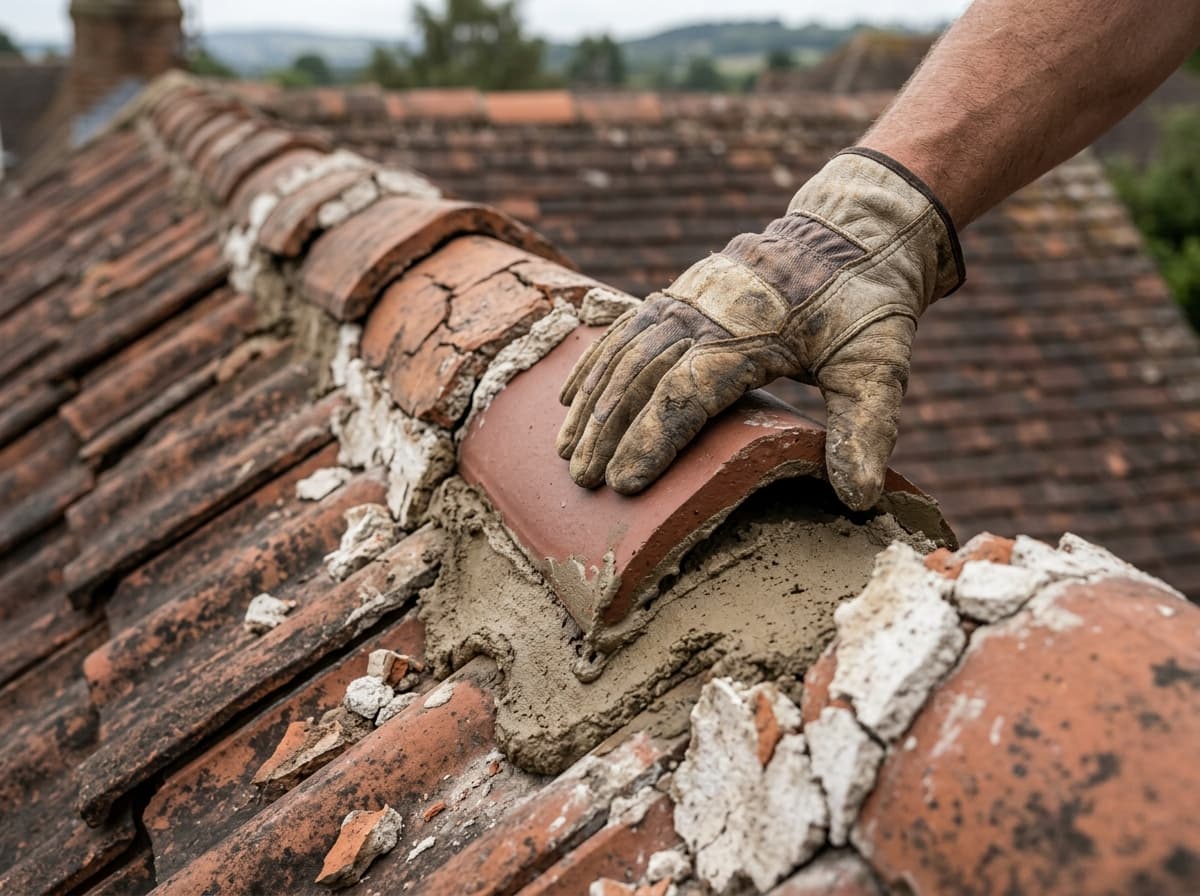
No part of a roof takes more wind loading than the ridge line running along the very top, which is exactly why a fault there tends to fail badly rather than quietly. What that fault actually looks like in Fleet depends on how the ridge was originally fitted. Around the Victorian railway-era core, the ridge is very often traditionally bedded in mortar that's had well over a century to crack and crumble under repeated thermal movement. Across the town's much larger stock of later estate housing, many roofs were instead fitted with dry-fix ridge systems using mechanical clips, which avoid the mortar problem entirely but can still work loose if a clip fails or wasn't seated properly during the original build. Because the ridge sits above everything else on the roof, a failure there is a direct route for water to track down into the roof space on either side, whichever system happens to be fitted.
Why Choose Hampshire Roof Repairs in Fleet?
Hampshire Roof Repairs passes every enquiry in Fleet, Hampshire to a local, independent roofer who brings the same standard of ridge tile repairs to every property. Fixing cracked mortar or loose ridge and hip tiles at the roof's apex — one of the most exposed points on any roof.
Key Benefits
- ✓Repairs whether your ridge is traditionally mortar-bedded or a dry-fix system
- ✓Addresses cracked or crumbling mortar properly, not just re-pointing over the top
- ✓Checks the full ridge line while access is there, not just the obviously loose tile
What Affects Ridge Tile Repairs in Fleet
Housing stock
A Victorian railway-era core surrounded by extensive late-20th-century housing estates. Older period roofs are more likely to still have mortar-bedded ridges that have had decades to crack, while more modern estate roofs are more often dry-fixed with clips that fail in a different way.
Weather exposure
Inland, near Fleet Pond — no coastal exposure. The ridge takes the most wind loading anywhere on a roof, so a town with sustained coastal or harbour exposure sees ridge and hip failures more often and sooner than a sheltered inland location.
Access
Straightforward driveway access across most of the town's later estates. Ridge work needs safe access right along the roof's highest point, which is more involved on a tight terraced street or rural lane than on an estate with open driveway access.
Free Survey in Fleet
Book a Free SurveyCall 01962 418719Also serving nearby: Farnborough, Yateley, Church Crookham
Ridge Tile Repairs in Fleet — FAQ
It genuinely depends on the property's age — older buildings near Fleet's railway-era core more often have traditional mortar bedding, while much of the town's later estate housing uses dry-fix systems.
Look for a visible gap between ridge sections, crumbling mortar you can see from ground level, or a section that looks slightly out of line with the rest of the ridge — any of those is worth a proper look rather than waiting.
Mortar is a rigid material sat on top of a roof structure that naturally moves slightly with temperature changes, wind loading and general settlement over the years. That constant small movement, combined with weathering, is what eventually causes mortar bedding to crack and crumble — it's a normal ageing process, not usually a sign of a fitting fault.
Both are legitimate approaches with their own trade-offs — dry-fix avoids the mortar-cracking issue but relies on mechanical clips staying properly seated, while mortar bedding is a longer-established method that eventually needs re-pointing. Which is right for your roof depends on its age, pitch and covering, which a survey can advise on.
It depends on the length of ridge affected and whether it's mortar or dry-fix. Book a free, no-obligation survey and the roofer will give you an honest figure.
Ridge Tile Repairs in Nearby Areas
Ready for Your Ridge Tile Repairs in Fleet?
Book your free no-obligation survey in Fleet today.