Ridge Tile Repairs in Liphook
Fixing cracked mortar or loose ridge and hip tiles at the roof's apex — one of the most exposed points on any roof.
Ridge Tile Repairs in Liphook
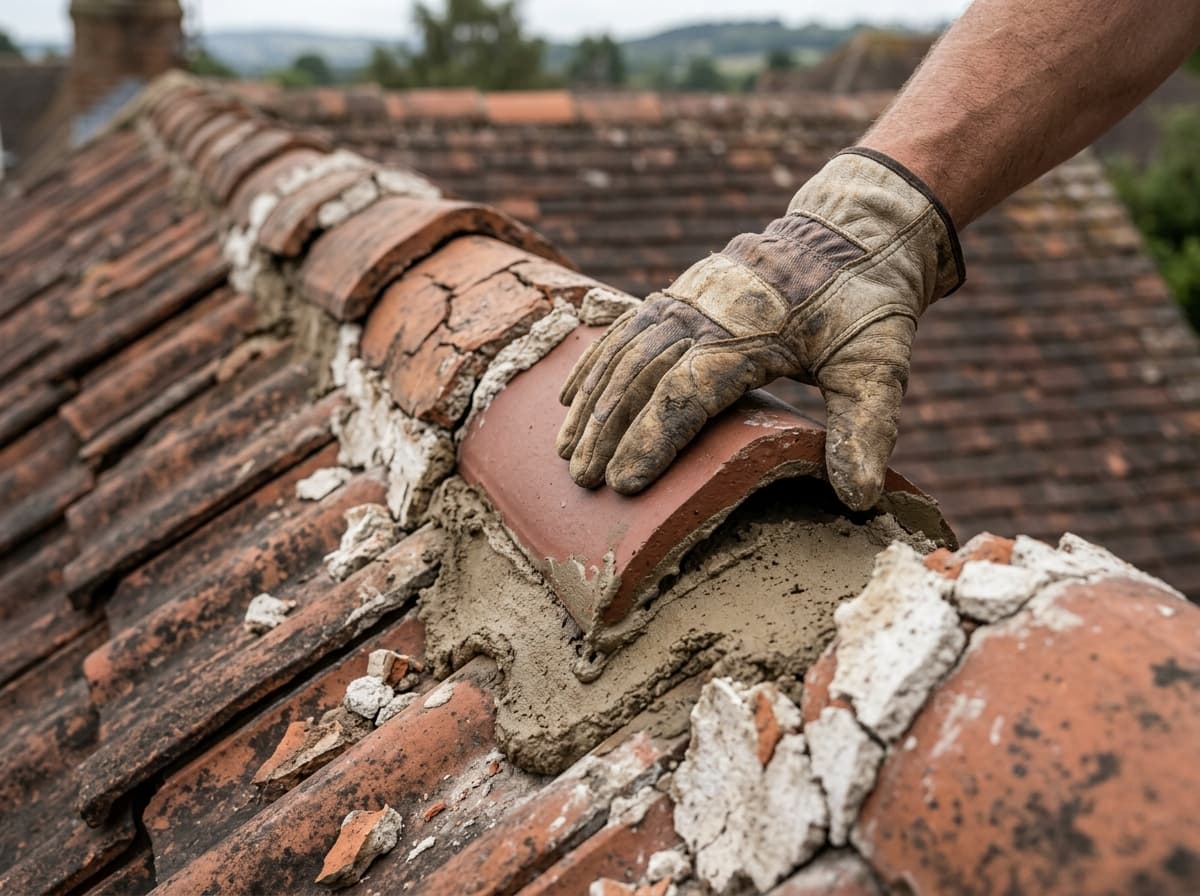
Liphook customers looking for ridge tile repairs turn to Hampshire Roof Repairs. The ridge and hip tiles running along the top and angles of a roof take more wind loading than almost anywhere else on the covering, simply because of their position. Traditionally these are bedded onto the roof in mortar, and that mortar bedding is exactly the kind of material that cracks, crumbles and eventually fails with age, weather and thermal movement — leaving the ridge tile loose or able to rock in the wind. Many roofs have since been fitted with a dry-fix ridge system instead, using mechanical clips rather than mortar, which avoids the crumbling-mortar problem but can still work loose if a clip fails or wasn't seated properly. Because the ridge sits at the very top of the roof, a failure here is a genuine route for water to get in at the apex and track down into the roof space on either side. The period cottages at Liphook's core are old enough that slate nail sickness and cracked ridge bedding are genuine, recurring issues, while the surrounding later housing is more straightforward concrete tile. Being inland and away from any coastal exposure, the main pressure on roofs here is simply age and the freeze-thaw cycle of a typical Hampshire winter rather than salt or storm-driven wear.
Why Choose Hampshire Roof Repairs in Liphook?
Hampshire Roof Repairs brings the same standard of ridge tile repairs to every property in Liphook, Hampshire. Fixing cracked mortar or loose ridge and hip tiles at the roof's apex — one of the most exposed points on any roof.
Key Benefits
- ✓Repairs whether your ridge is traditionally mortar-bedded or a dry-fix system
- ✓Addresses cracked or crumbling mortar properly, not just re-pointing over the top
- ✓Checks the full ridge line while access is there, not just the obviously loose tile
Ridge Tile Repairs in Liphook — FAQ
Mortar is a rigid material sat on top of a roof structure that naturally moves slightly with temperature changes, wind loading and general settlement over the years. That constant small movement, combined with weathering, is what eventually causes mortar bedding to crack and crumble — it's a normal ageing process, not usually a sign of a fitting fault.
Both are legitimate approaches with their own trade-offs — dry-fix avoids the mortar-cracking issue but relies on mechanical clips staying properly seated, while mortar bedding is a longer-established method that eventually needs re-pointing. Which is right for your roof depends on its age, pitch and covering, which a survey can advise on.
It depends on the length of ridge affected and whether it's mortar or dry-fix. Book a free roof survey and we'll give you an honest figure.
Ridge Tile Repairs in Nearby Areas
Ready for Your Ridge Tile Repairs in Liphook?
Book your free no-obligation survey in Liphook today.