Ridge Tile Repairs in Lyndhurst
Fixing cracked mortar or loose ridge and hip tiles at the roof's apex — one of the most exposed points on any roof.
Ridge Tile Repairs in Lyndhurst
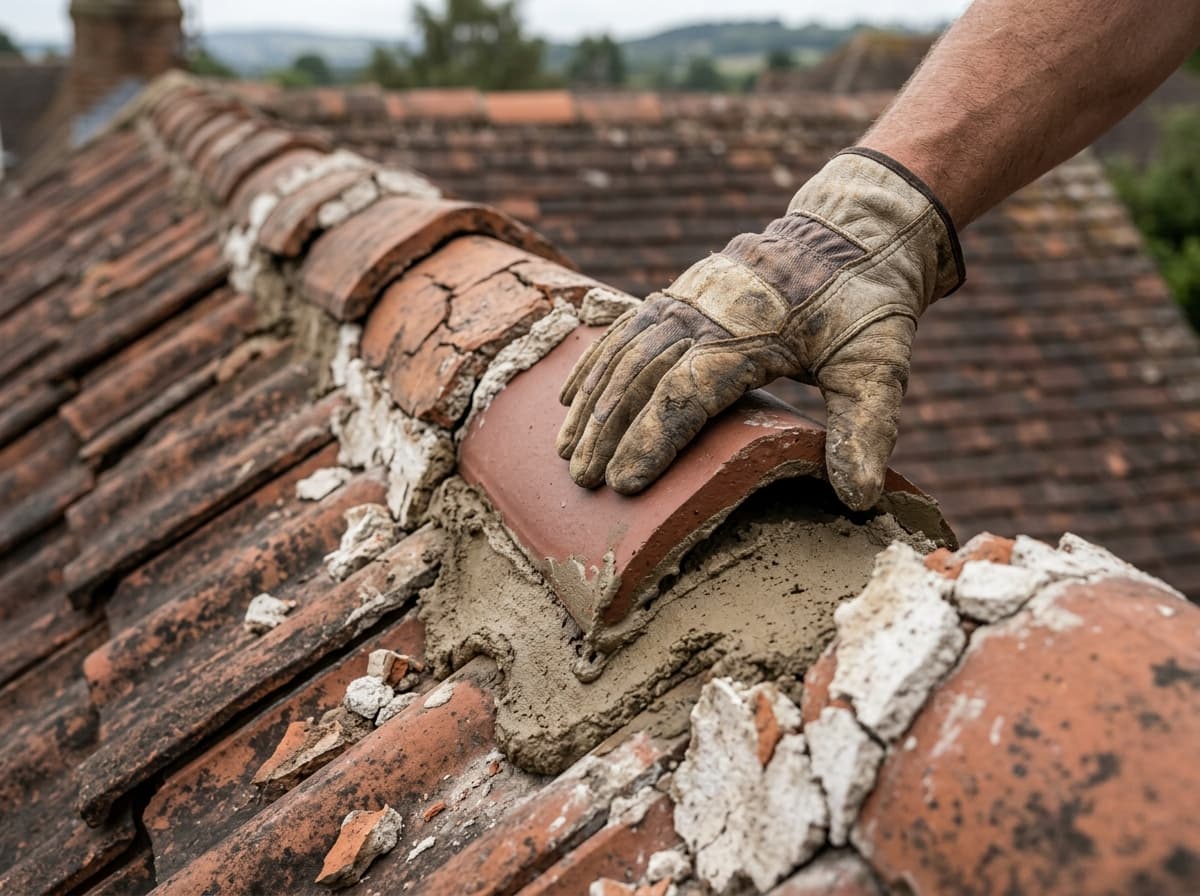
The mortar-bedded ridges on Lyndhurst's older buildings have had generations of thermal movement and weathering to crack, and a ridge tile able to rock loose at the roof's highest point is a genuine route for water into the roof space either side. Given the village centre's conservation area and National Park status, repairs generally mean re-bedding to match the existing style rather than switching to a modern dry-fix clip system. Worth checking too, given how much tree cover surrounds the village, is whether any damage along the ridge line traces back to a fallen branch rather than ordinary weathering.
Why Choose Hampshire Roof Repairs in Lyndhurst?
Hampshire Roof Repairs passes every enquiry in Lyndhurst, Hampshire to a local, independent roofer who brings the same standard of ridge tile repairs to every property. Fixing cracked mortar or loose ridge and hip tiles at the roof's apex — one of the most exposed points on any roof.
Key Benefits
- ✓Repairs whether your ridge is traditionally mortar-bedded or a dry-fix system
- ✓Addresses cracked or crumbling mortar properly, not just re-pointing over the top
- ✓Checks the full ridge line while access is there, not just the obviously loose tile
What Affects Ridge Tile Repairs in Lyndhurst
Housing stock
A historic New Forest village with a Georgian and Victorian core. Older period roofs are more likely to still have mortar-bedded ridges that have had decades to crack, while more modern estate roofs are more often dry-fixed with clips that fail in a different way.
Weather exposure
Inland, within the New Forest — no coastal exposure. The ridge takes the most wind loading anywhere on a roof, so a town with sustained coastal or harbour exposure sees ridge and hip failures more often and sooner than a sheltered inland location.
Planning & designation
Lyndhurst sits within the New Forest National Park, with conservation-area protection over its historic centre. A conservation-area or listed ridge line usually needs re-bedding to match the existing style rather than switching to a different system, which is worth knowing before any repair starts.
Access
Rural lane access with open-forest grazing nearby, tighter streets in the village centre. Ridge work needs safe access right along the roof's highest point, which is more involved on a tight terraced street or rural lane than on an estate with open driveway access.
Free Survey in Lyndhurst
Book a Free SurveyCall 01962 418719Also serving nearby: Brockenhurst, Beaulieu, Totton
Ridge Tile Repairs in Lyndhurst — FAQ
Generations of thermal movement, wind loading and general settlement crack and crumble the bedding over time — a normal ageing process on housing this age.
Generally not — given the conservation area and National Park status, re-bedding to match the existing mortar keeps the roof consistent with its protected setting.
Mortar is a rigid material sat on top of a roof structure that naturally moves slightly with temperature changes, wind loading and general settlement over the years. That constant small movement, combined with weathering, is what eventually causes mortar bedding to crack and crumble — it's a normal ageing process, not usually a sign of a fitting fault.
Both are legitimate approaches with their own trade-offs — dry-fix avoids the mortar-cracking issue but relies on mechanical clips staying properly seated, while mortar bedding is a longer-established method that eventually needs re-pointing. Which is right for your roof depends on its age, pitch and covering, which a survey can advise on.
It depends on the length of ridge affected and whether it's mortar or dry-fix. Book a free, no-obligation survey and the roofer will give you an honest figure.
Ready for Your Ridge Tile Repairs in Lyndhurst?
Book your free no-obligation survey in Lyndhurst today.